Whole House Water Filter for Cleaner Home Water
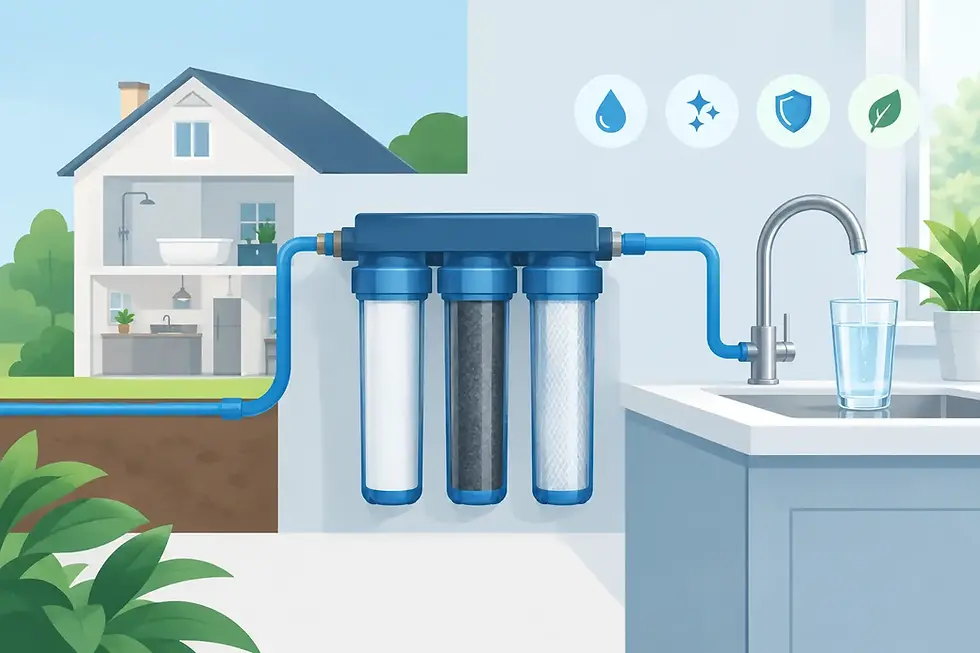
The water you use at the kitchen sink is only a small part of your household’s daily water exposure. Your family also showers, bathes, brushes teeth, washes clothes and cleans with it. A whole house water filter treats water at the point where it enters your home, helping give every tap, shower and appliance access to cleaner, better-quality water.
For many Australian households, the first change is easy to notice: less chlorine smell in the shower, softer-feeling hair and skin, and bathroom glass that is easier to keep clean. The more important benefit is confidence that water is being treated before it reaches the places your family uses most.
What a whole house water filter does
A whole-home system is installed on the main incoming water line, before the water branches out to bathrooms, kitchen taps, laundry and outdoor outlets. Rather than filtering one drinking-water tap, it creates a treatment barrier for the residence.
The exact contaminants a system can reduce depend on the filtration media and the local water supply. A professionally engineered configuration may combine sediment filtration, activated carbon and specialised media to target issues such as chlorine, particulate matter, unpleasant taste and odour, heavy metals, fluoride, PFAS/PFOA, hard-water minerals or biological contaminants.
This is why a generic filter is not always the right answer. Town water, bore water, rainwater and mixed supplies can present very different treatment needs. The quality of water can also vary between suburbs, properties and seasons.
Sediment filtration protects the system and your home
Sediment filters capture suspended particles such as sand, silt, rust and pipe debris. They are particularly useful where water carries visible particles or where older plumbing may contribute residue.
Removing sediment early helps protect the filters that follow. It can also reduce grit in tap water and support the efficient operation of appliances, shower heads and valves.
Carbon filtration improves everyday water quality
Activated carbon is widely used to reduce chlorine, unpleasant odours and compounds that affect taste. For mains-water households, this stage often makes the most immediate lifestyle difference.
Chlorinated water can leave a noticeable smell in bathrooms and may feel drying for some people when used frequently for showering. Carbon filtration helps create water that feels more pleasant to use, while making a meaningful difference to the smell of towels, hair and bathroom spaces.
Specialised media targets specific concerns
Some homes need more than sediment and carbon. Depending on the water assessment and your priorities, specialised filtration media can be selected for contaminants or conditions such as fluoride, metals, PFAS/PFOA or mineral hardness.
The right treatment path depends on the result you want. If your concern is chlorine odour, a quality carbon stage may be central. If scale is building up on taps, shower screens and heating elements, mineral treatment may need to be part of the design. If dissolved contaminants are a priority for drinking water, a dedicated reverse osmosis system is often the strongest complementary solution.
Why whole-home treatment and reverse osmosis work well together
A whole-house system and a reverse osmosis unit have different roles. They are not competing products.
Whole-home filtration is designed to improve water across the house. It is the practical choice for showers, baths, laundry, cleaning and the water your household uses throughout the day. It can reduce chlorine exposure, sediment and selected contaminants before they reach every outlet.
Reverse osmosis is typically installed at a dedicated drinking-water point. It uses precision membrane filtration to reduce a broad range of dissolved impurities at a molecular level. A well-designed reverse osmosis system can remove up to 99% of dissolved impurities, depending on the water conditions, membrane performance and contaminants being tested.
For families seeking comprehensive treatment, this combination makes sense: whole-home filtration for the water you live in, and advanced reverse osmosis for the water you drink and cook with. It provides a more complete solution than relying on a jug filter or a single filtered tap alone.
Is a whole house water filter right for your property?
A whole-home system is especially worthwhile when water quality affects more than drinking water. You may be a strong candidate if the smell of chlorine is obvious in showers, family members dislike the feel of water on skin or hair, scale is hardening on fixtures, or you want treatment at more than one tap.
It can also suit households that want to reduce reliance on bottled water while improving the water used for food preparation. For growing families, the value often lies in consistency. There is no need to remember which tap is filtered before filling a bath, rinsing fruit or making a cup of tea.
There are trade-offs to consider. A whole-house system requires suitable installation space, appropriate plumbing access and periodic filter changes. Some specialised systems may also have higher upfront costs because they use multiple treatment stages or larger-capacity vessels. These factors are worth weighing against the ongoing comfort, convenience and appliance-protection benefits.
Water pressure must also be considered. Every filtration stage creates some pressure drop, particularly as cartridges collect sediment over time. A correctly sized, professional-grade system is designed around household flow requirements, so several taps or showers can operate without sacrificing everyday usability.
Choosing the right whole house water filter
The best system starts with the water, not a pre-packed product. Before selecting equipment, consider whether your home uses mains water, tank water, bore water or a combination. A water test or detailed assessment can identify likely contaminants, mineral content and biological risks that are not visible at the tap.
For rainwater and other stored-water supplies, advanced UV-C technology may be recommended. UV-C treatment is designed to address biological contaminants by inactivating microorganisms as water passes through the treatment chamber. It is an important additional protection where microbiological water quality is a concern, but it does not replace physical filtration. Sediment must be removed first so the UV-C light can work effectively.
Capacity matters as much as filtration type. A system sized for a small unit may not suit a home with multiple bathrooms, a large family or high water use. Filter replacement intervals should be based on water quality and household consumption, rather than an arbitrary date on the calendar.
It is also sensible to ask what a system is designed to reduce, how that performance is supported, and what maintenance it needs. Clear answers help you compare professional-grade filtration with basic options that may only address one part of the problem.
Everyday benefits you can see and feel
Clean water is not only about the glass on the bench. A properly configured whole-home system can improve the way your household experiences water from morning to night.
Showering in reduced-chlorine water can leave the bathroom without the familiar pool-like smell. Many households value the softer-feeling result on hair and skin, particularly where showering is frequent. Reduced sediment can also help protect shower heads and tap aerators from clogging.
Where hard-water minerals are managed, there may be less residue on shower screens, tiles, kettles and fixtures. Cleaning is still required, but the stubborn white build-up that can make bathrooms feel permanently unfinished may be easier to control. Appliances that use water may also benefit from reduced mineral scale, although the result depends on the source-water hardness and the treatment method used.
In the kitchen, a whole-home system improves the water used for washing produce, filling pots and making drinks. Add a reverse osmosis drinking-water system and you can take dissolved-impurity reduction further at the point where purity matters most.
Professional design delivers better protection
A filtration system should be matched to your water source, home size and family’s priorities. Installing a large filter does not automatically mean it will address the contaminants you are concerned about. Effective treatment comes from the right sequence of technologies, correctly sized housings and media, sound plumbing installation, and a maintenance plan that keeps performance on track.
Home Water Filtration provides consultation-led solutions built around professional-grade technology, from whole-home filtration and mineral treatment to precision membrane filtration and UV-C protection. The goal is straightforward: water that supports a cleaner, more comfortable and more confident home.
Your water is used in hundreds of small moments each week. Treating it at the point it enters your home can make those moments feel simpler, cleaner and better protected.


Comments